


Music for a company event should have a shape. The atmosphere during arrivals may call for a different level of energy from the final hour on the dancefloor. Thinking through that progression before the event makes the entertainment feel connected to the whole evening.
A DJ and sax duo offers several possibilities. The DJ can establish the mood as people enter, adjust the pace around dinner or speeches and build towards a party set. The saxophonist can join for agreed sections, adding a live performance element without requiring every minute to feel like a headline show.
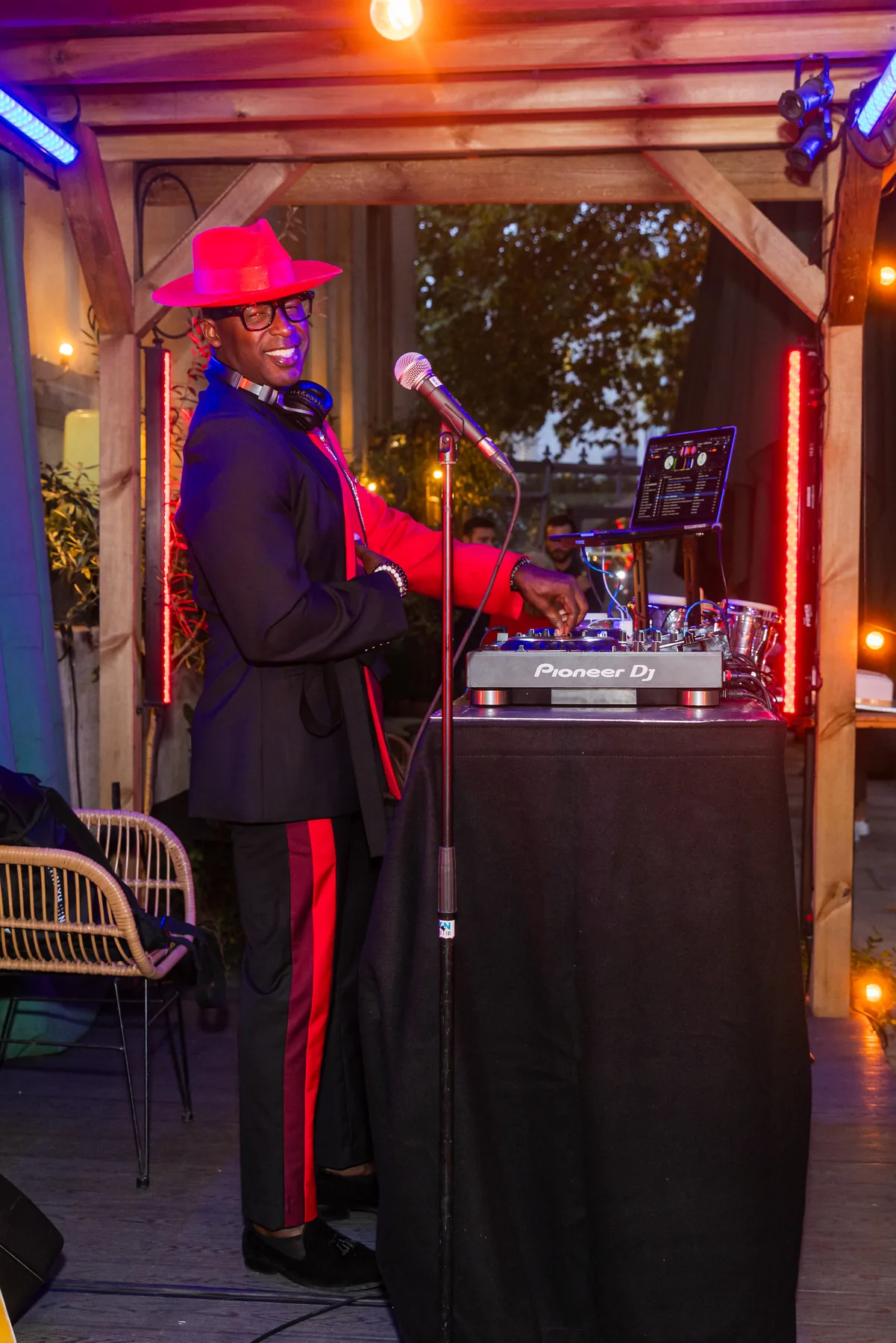
Our DJ and sax booking in The Garden at One Marylebone was for a company event, where the venue and occasion made it especially important to consider how the music fitted the room. For any new booking, we ask about the running order, access, performance times and the points when guests will move between activities or spaces.
There is no single schedule that suits every corporate celebration. An awards evening, client reception and end of year party all place different demands on the music. A short conversation about the guest journey helps us recommend the right format.
Start with the moments guests notice
A schedule is more useful when it identifies changes of mood, rather than only supplier call times. For example, mark the point when arrivals end, when guests should focus on a welcome, when food is served and when the social part of the night becomes a party. If these moments are fluid, the DJ needs a contact on site who can confirm changes. The saxophonist can then be placed in sections that have enough space for live performance to register. A live feature during a speech or when everyone is moving rooms would have little opportunity to land.
Allow for production time
The performance window is only one part of the booking. Equipment may need to be brought in, positioned, connected and checked before guests enter. The right arrival time depends on the venue, the equipment supplier and whether other teams are also preparing the room. At a venue such as The Garden at One Marylebone, an organiser should establish where suppliers enter, the usable setup window and whether any equipment must be removed immediately afterwards. We would work these answers into a practical plan rather than assume all venues operate in the same way.

Keep a little flexibility
Company events do not always run to the minute. A welcome can start late; conversations may continue longer than expected; guests might be ready to dance earlier than planned. A DJ-led set can accommodate a change in energy, provided the organiser and performers know who is authorised to adjust the programme. It is helpful to agree a principal contact and identify the formalities that cannot move. That lets the music respond to the room while protecting key moments. The purpose of the schedule is to guide the evening and give everyone a shared reference, not to make the entertainment rigid.
Ask your event producer or venue coordinator to share the latest running order with all entertainment and technical suppliers. A single updated version prevents a DJ, saxophonist and sound technician from working to different times. It also makes it easier to handle a change on the day without missing a formal announcement or a planned music cue.
Share your event schedule with DJ Knight Music and we can discuss where DJ and sax would have the strongest effect.
Party DJS FAQs


That depends on the guest journey. A reception, a shift into dancing or a featured party section can each work with the right brief.
Yes. Include speeches and announcements in the running order so the DJ and technical team can plan cues and microphones.
Name a contact who can communicate changes to the performers. The DJ can adapt the music around an updated schedule.
DJ Knight Music offers the finest DJs, musicians and event production services throughout the UK and abroad.
 Click Here To Make Quick Enquiry


